Featured
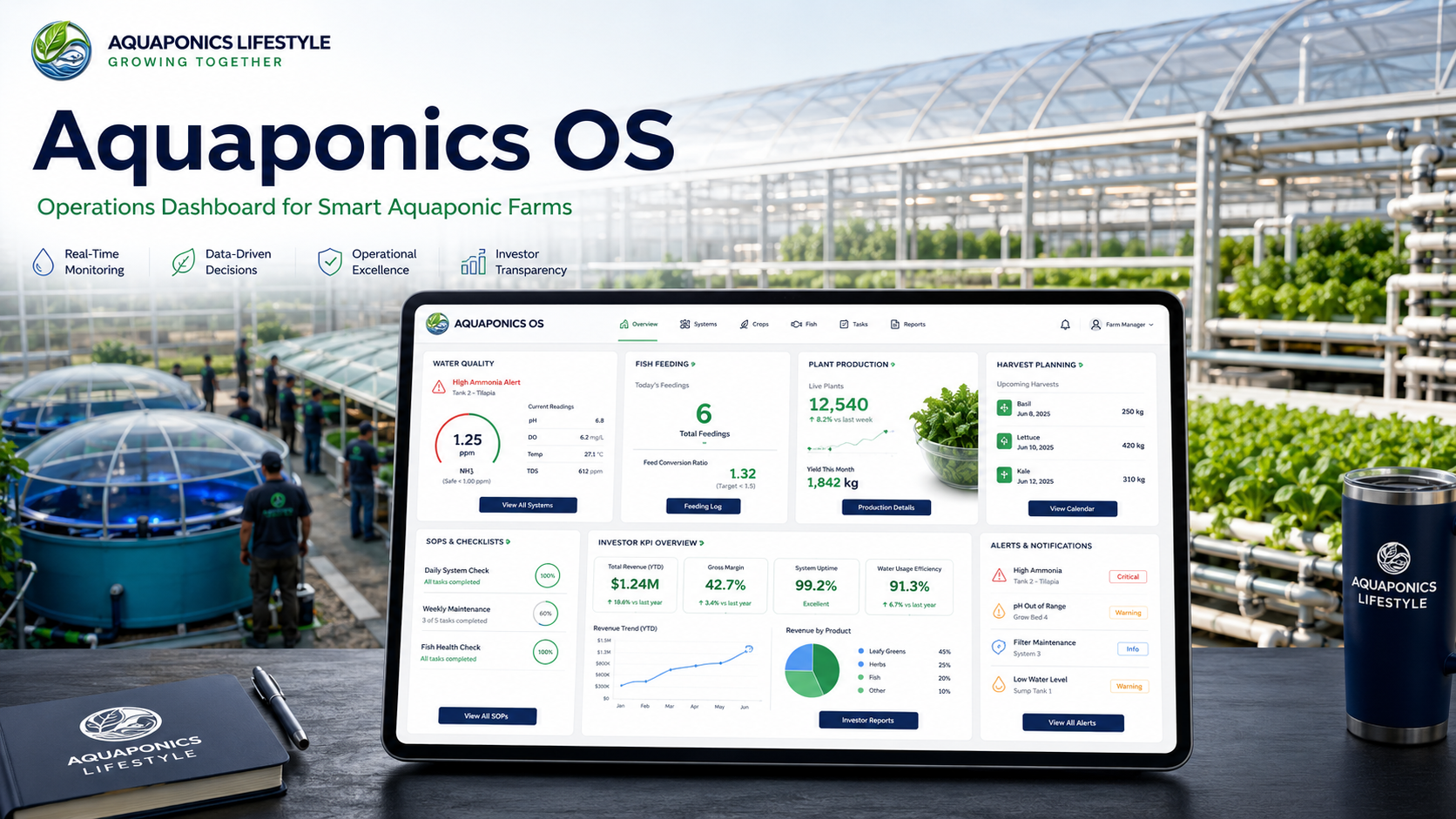
What is Aquaponics OS?
Discover how Aquaponics OS helps commercial aquaponics operators manage daily operations, improve consistency, train employees, and grow profitable businesses.
The Operating Platform for Commercial Aquaponics
Practical articles, guides, tools, and insights to help you understand aquaponics, make informed decisions, improve operations, and build successful local food systems.
Practical knowledge for building efficient and resilient food systems.
Learn how fish, plants, water, and beneficial bacteria work together.
Access beginner-friendly learning, operator guidance, and business-focused resources.
Explore how local food production can support education, resilience, and economic opportunity.
 01
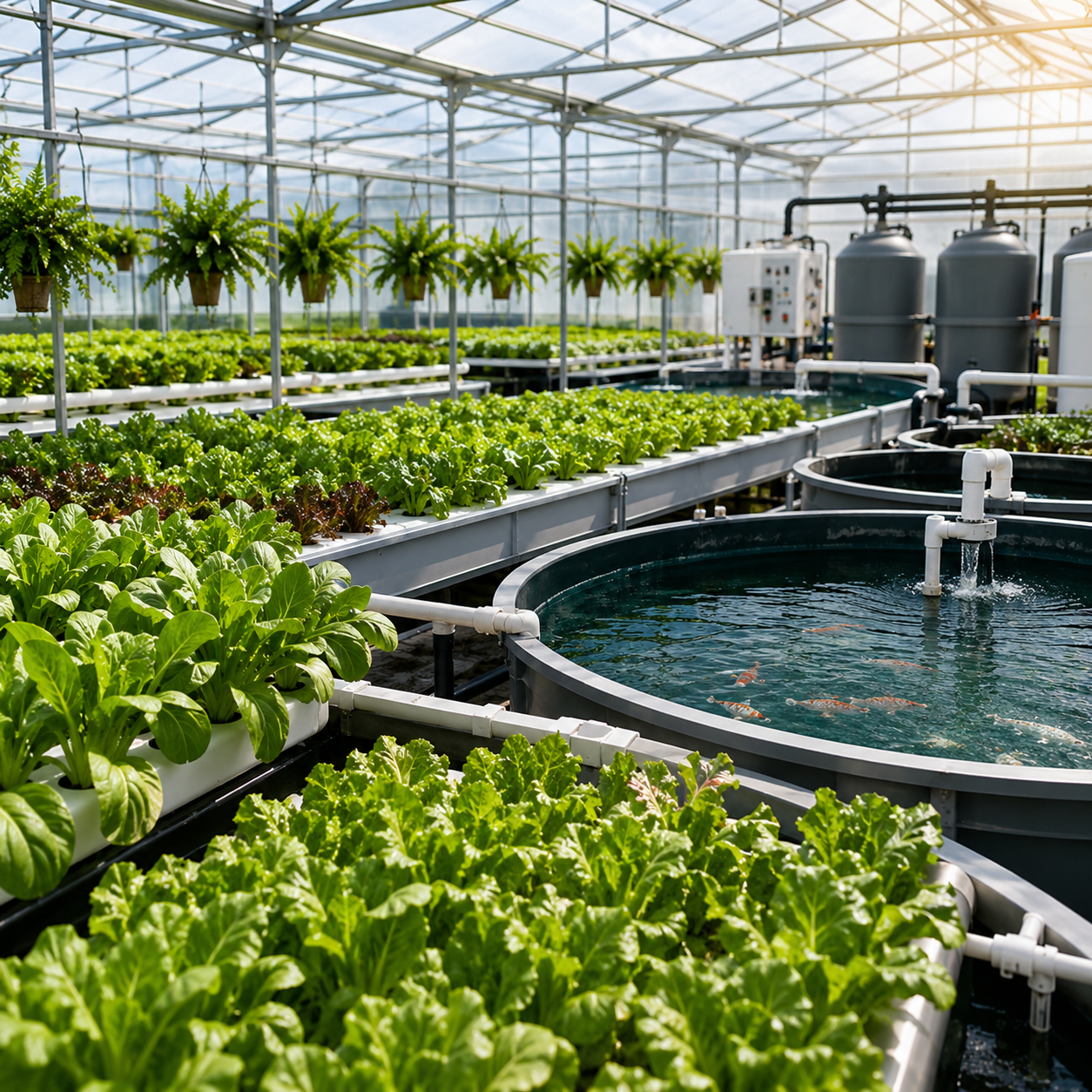
01Learn how fish, plants, water, filtration, and beneficial bacteria work together in a recirculating food-production ecosystem.
Read More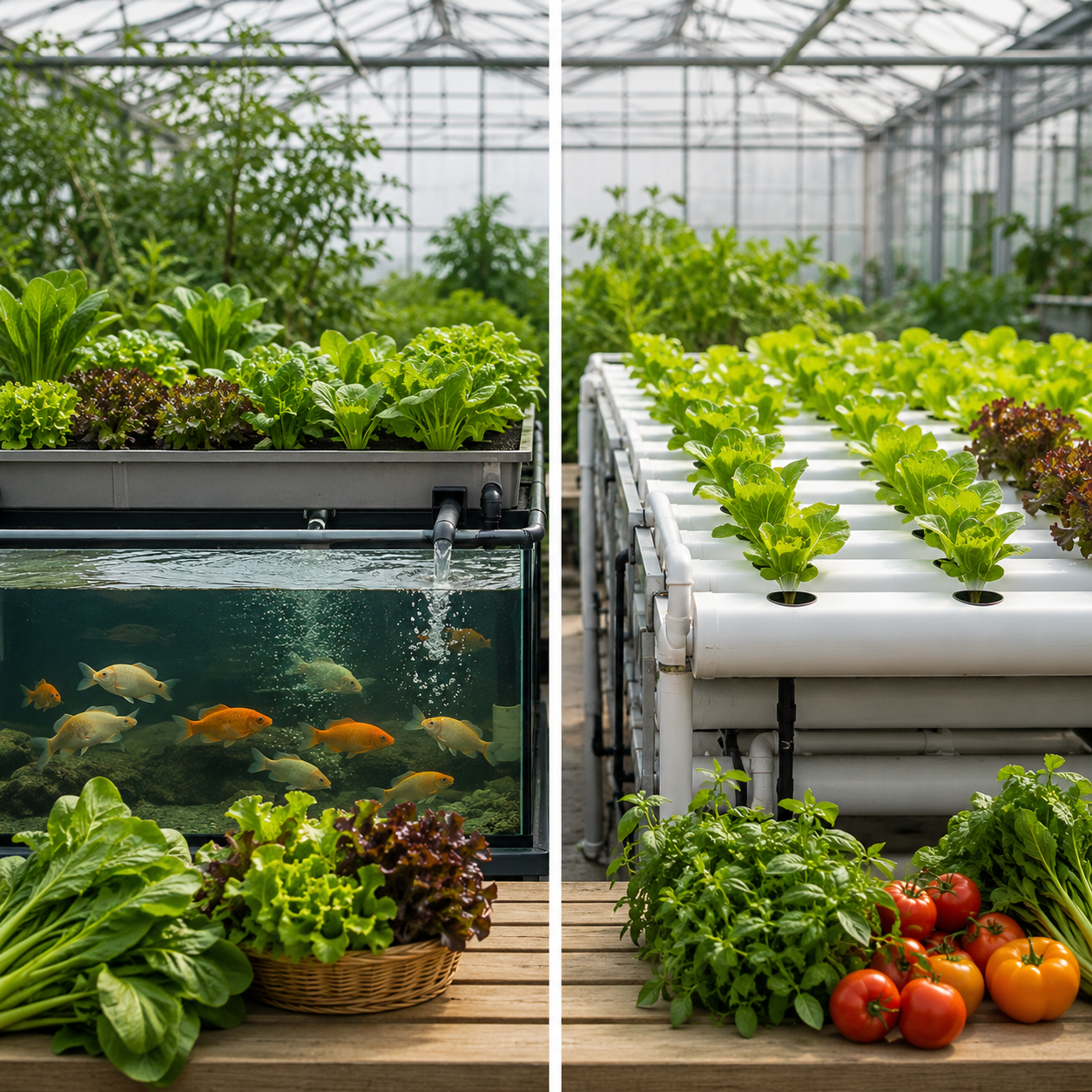 02
02Compare the two growing methods and understand which model may be better suited to different goals and applications.
Read More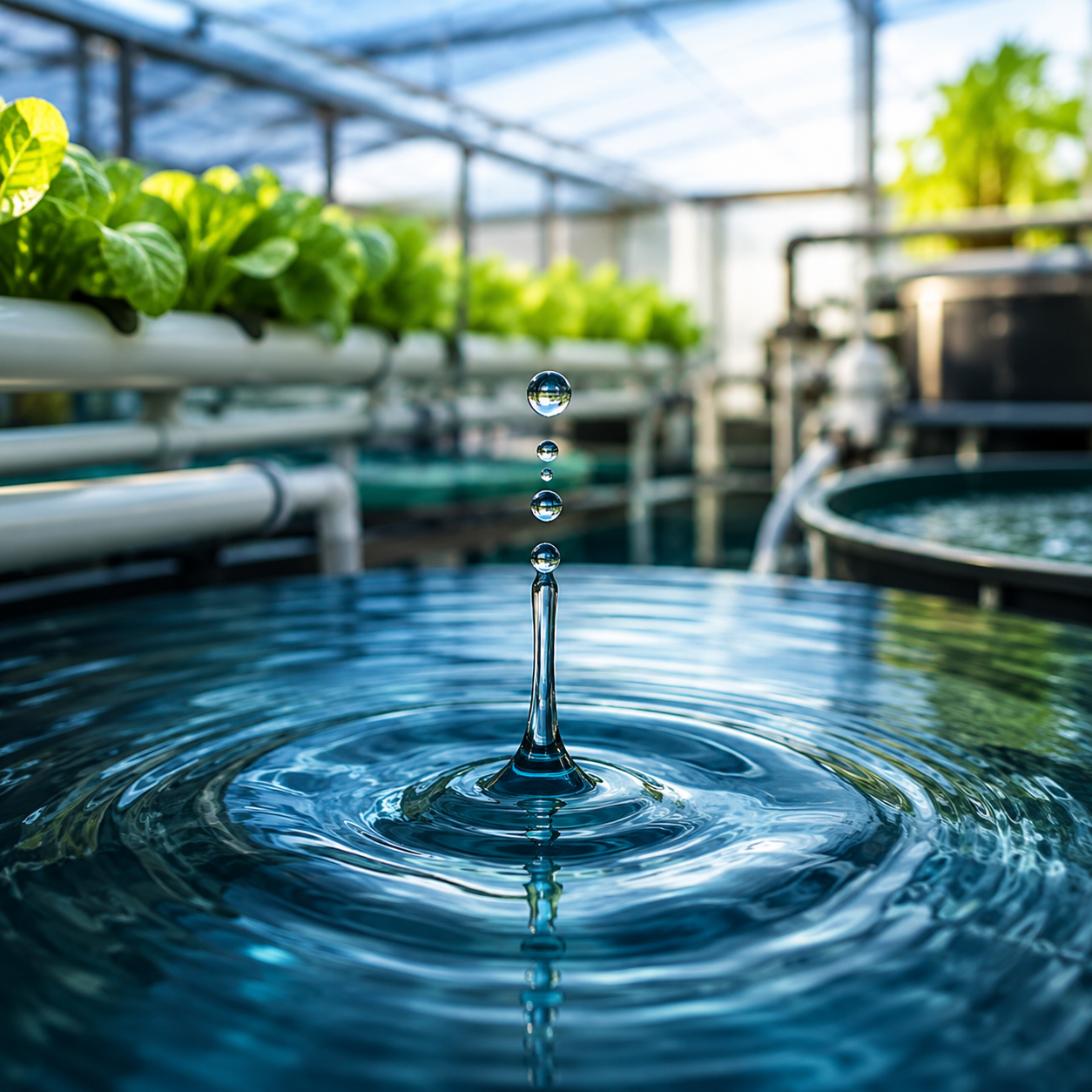 03
03Explore how water recirculation can reduce water consumption while supporting dependable crop production.
Read More 04
04Explore potential revenue streams, major cost factors, operating requirements, and the planning needed to build a sustainable aquaponics business.
Read More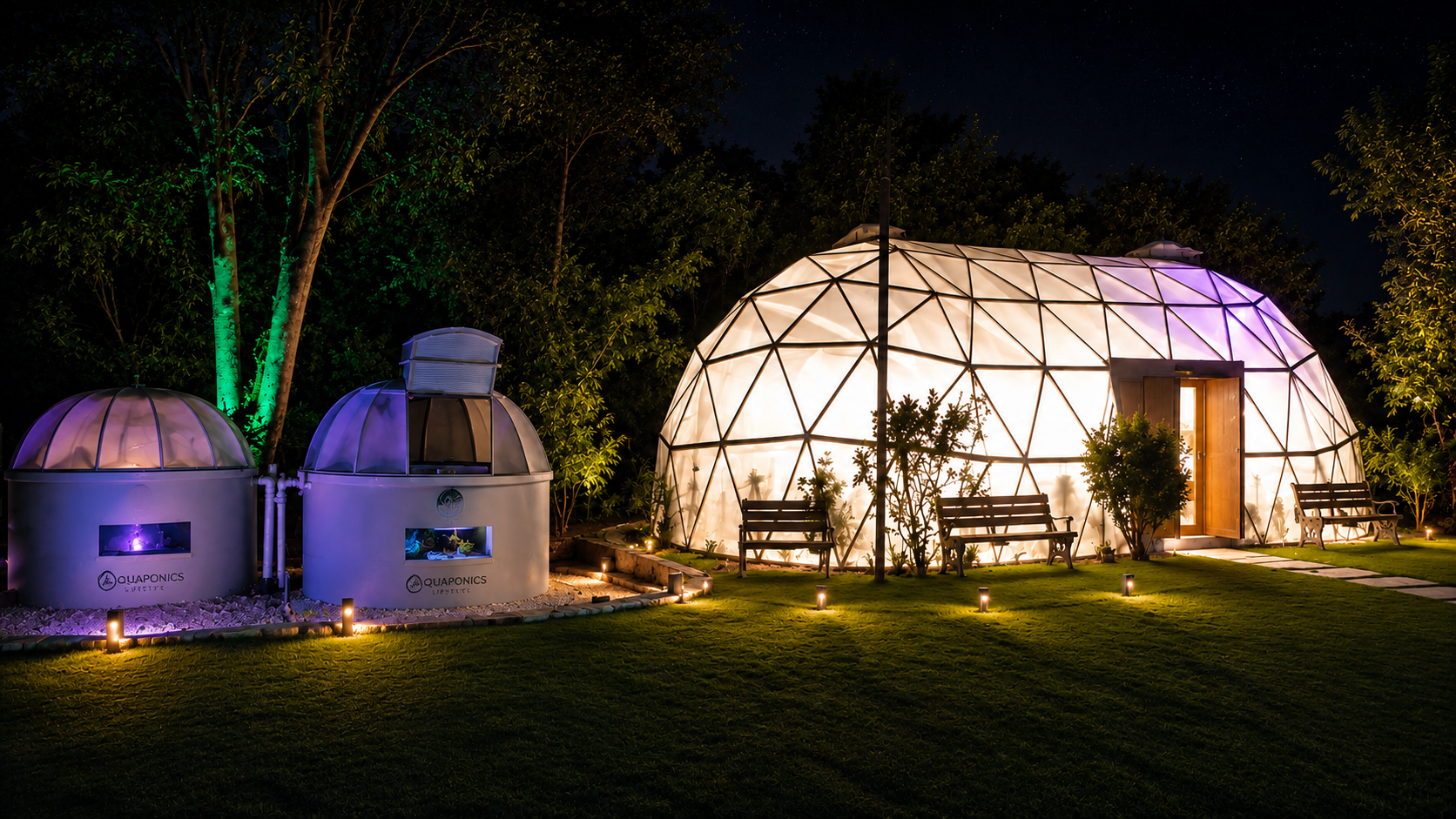 05
05Review the major cost categories that may affect the total investment, including system scale, greenhouse design, site preparation, utilities, installation, training, and monitoring.
Read More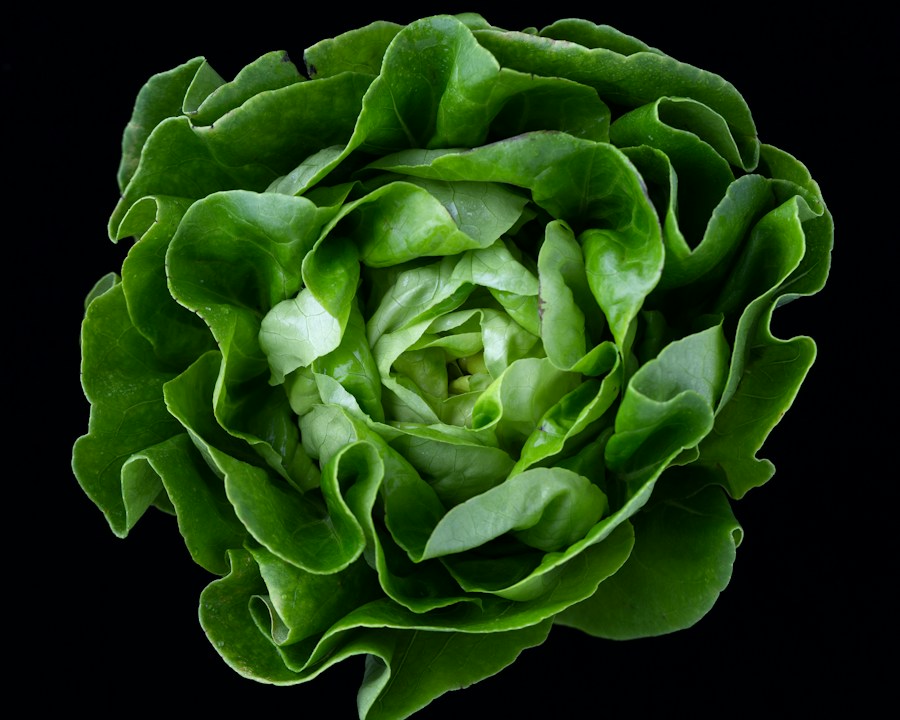 06
06Learn which leafy greens, herbs, fruiting crops, and specialty varieties may perform well in controlled aquaponics environments.
Read More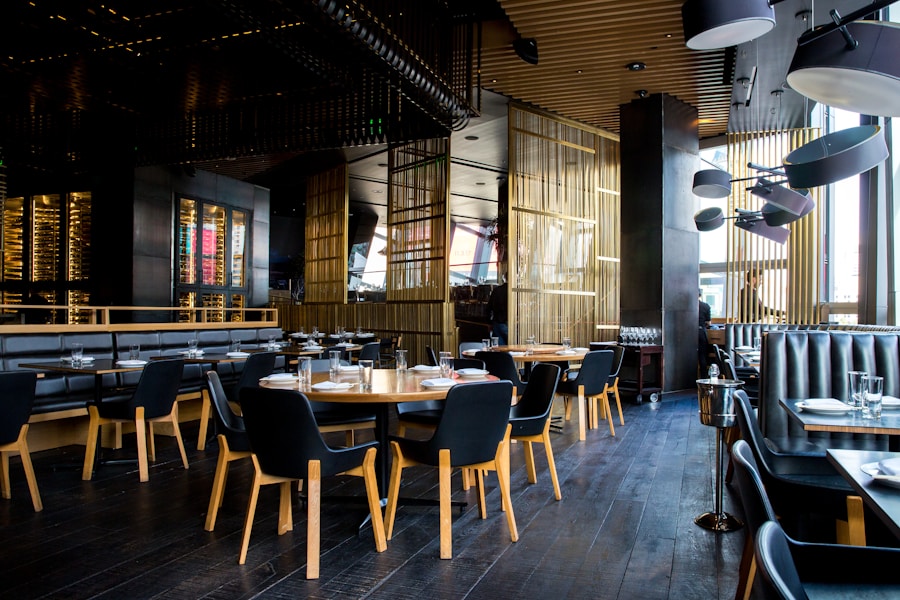 07
07Explore the value of fresh, locally grown, traceable produce for chefs, restaurants, hospitality partners, and farm-to-table programs.
Read More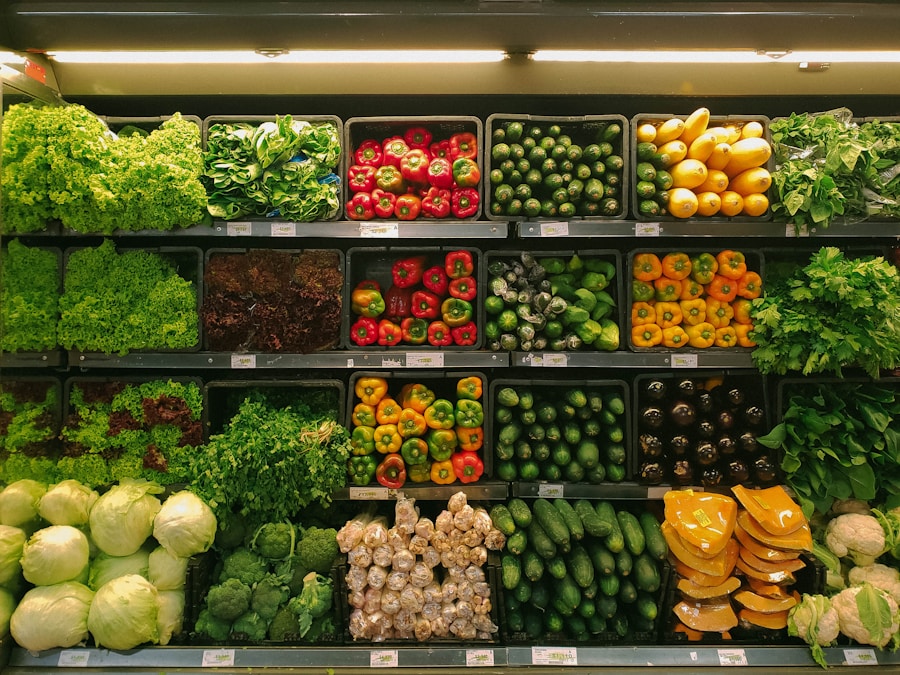 08
08Understand how decentralized food-production systems can strengthen local access, education, skills, and community resilience.
Read More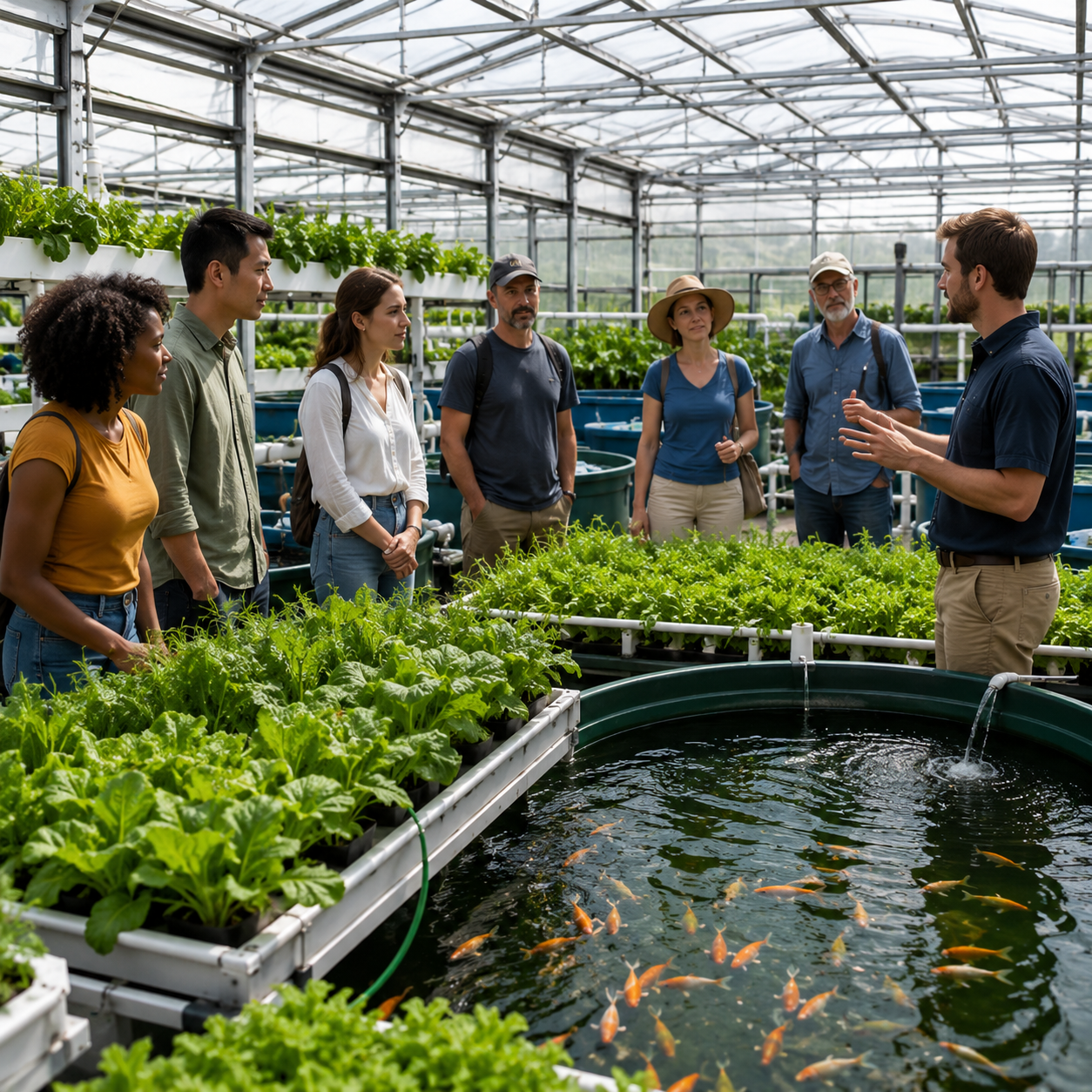 09
09Get a behind-the-scenes look at the greenhouse, fish tanks, filtration, plant production, training areas, and the complete aquaponics cycle.
Read More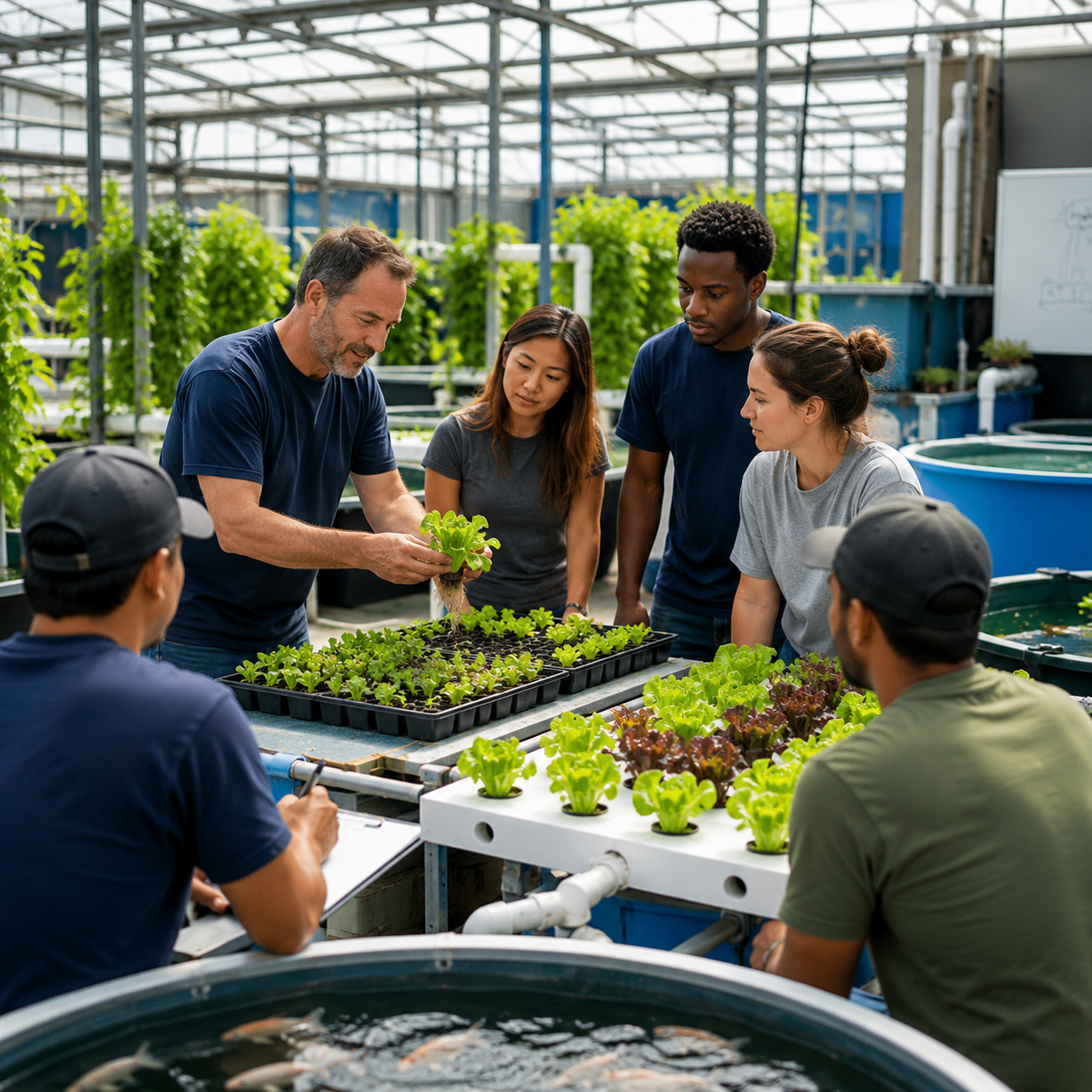 10
10Learn how structured lessons, SOPs, logs, troubleshooting procedures, and hands-on practice can improve operator confidence and performance.
Read MoreExplore trusted books, educational organizations, market information, supplier resources, off-grid technologies, passive greenhouse systems, renewable-energy solutions, and emerging innovations that can help growers design, operate, troubleshoot, and scale resilient aquaponics projects.
A beginner-friendly introduction to planning, building, cycling, and maintaining home-scale aquaponics systems. Topics include fish, plants, filtration, water quality, system startup, and routine operation.
A practical overview of aquaponics system planning, construction, fish care, plant production, water quality, equipment, and regular maintenance.
A technical and research-focused reference covering aquaponics science, engineering, sustainability, economics, system integration, production methods, and commercial applications.
A comprehensive reference covering recirculating aquaculture system engineering, filtration, oxygenation, hydraulics, water treatment, fish production, and biological process management.
A resource category for professional manuals focused on commercial farm planning, crop scheduling, SOPs, food safety, labor management, production forecasting, and system economics.
A practical guide to designing and building energy-efficient solar greenhouses for extended-season or year-round production. Covers passive solar design, orientation, insulation, thermal mass, heat storage, ventilation, climate management, glazing, and energy-conscious greenhouse construction.
Book recommendations are provided for educational purposes. Aquaponics Lifestyle does not claim ownership of third-party publications and is not responsible for their content, pricing, availability, purchasing terms, or future revisions. Any affiliate relationship will be clearly disclosed.
Research potential business models, customer groups, sales channels, partnerships, educational services, and local-food opportunities.
Fresh lettuce, herbs, specialty greens, edible flowers, tomatoes, cucumbers, peppers, and locally raised fish supplied directly to chefs and farm-to-table restaurants.
Direct-to-consumer sales of fresh produce, seedlings, herbs, educational materials, branded products, and fish where legally permitted.
Potential wholesale relationships with independent grocers, natural-food stores, cooperatives, specialty retailers, and regional retail chains.
Subscription produce boxes that provide recurring revenue while connecting local households with the farm.
Potential relationships with schools, colleges, hospitals, senior-living, corporate campuses, correctional facilities, and public institutions.
Premium local produce and culinary partnerships for hotels, resorts, wellness destinations, event venues, and hospitality groups.
Turnkey aquaponics systems for farms, entrepreneurs, schools, nonprofits, communities, institutions, and international development programs.
Online courses, operator training, staff workshops, school programs, consulting, and future certification offerings.
Educational tours, school field trips, private group visits, community events, demonstrations, and special farm experiences.
Food trucks, cafés, restaurants, produce stands, pop-up dining programs, and culinary experiences using farm-grown produce and fish.
System planning, implementation, troubleshooting, staff training, documentation, maintenance planning, monitoring, and production assistance.
Future opportunities to license the Aquaponics Lifestyle business model, training systems, operating standards, branded programs, and technology platform.
Market conditions, regulations, pricing, customer demand, production capacity, distribution costs, food-safety requirements, and labor needs vary by location. Every opportunity should be evaluated through local customer discovery, feasibility research, and verified financial projections.
Market reports, grants, agricultural statistics, business templates, mentoring, local-food research, rural-development assistance, or production guidance.
Explore ResourceMarket reports, grants, agricultural statistics, business templates, mentoring, local-food research, rural-development assistance, or production guidance.
Explore ResourceMarket reports, grants, agricultural statistics, business templates, mentoring, local-food research, rural-development assistance, or production guidance.
Explore ResourceMarket reports, grants, agricultural statistics, business templates, mentoring, local-food research, rural-development assistance, or production guidance.
Explore ResourceMarket reports, grants, agricultural statistics, business templates, mentoring, local-food research, rural-development assistance, or production guidance.
Explore ResourceMarket reports, grants, agricultural statistics, business templates, mentoring, local-food research, rural-development assistance, or production guidance.
Explore ResourceMarket reports, grants, agricultural statistics, business templates, mentoring, local-food research, rural-development assistance, or production guidance.
Explore ResourceMarket reports, grants, agricultural statistics, business templates, mentoring, local-food research, rural-development assistance, or production guidance.
Explore ResourceMarket reports, grants, agricultural statistics, business templates, mentoring, local-food research, rural-development assistance, or production guidance.
Explore ResourceExternal websites are provided as educational references. Aquaponics Lifestyle does not control or guarantee the accuracy, availability, security, recommendations, or policies of third-party websites.
Learn how greenhouse orientation, insulation, ventilation, thermal storage, solar gain, shading, glazing, and ground-coupled systems can reduce energy demand while supporting crop resilience.
Orientation, glazing angles, solar exposure, insulated north walls, airtight construction, and seasonal sun management.
Solar access, prevailing winds, slope, drainage, access roads, utility placement, shade, and future expansion.
Water tanks, masonry, rock, soil, concrete, and phase-change materials that absorb heat during warm periods and release it later.
Twin-wall polycarbonate, multiwall polycarbonate, insulated glass, infrared-retaining films, and other energy-efficient glazing.
Foundation insulation, perimeter insulation, insulated north walls, energy curtains, thermal barriers, and reduced air leakage.
Roof vents, ridge vents, sidewall vents, circulation fans, exhaust fans, evaporative cooling, and automated controls.
Exterior shade cloth, interior screens, retractable curtains, reflective coatings, seasonal shading, automated solar-gain control.
Subsurface air-circulation systems that store greenhouse heat and moisture in soil or thermal-storage material.
Ground-to-Air Heat Transfer systems that circulate greenhouse air through buried pipe networks for heating, cooling, humidity management, or daily thermal storage.
Buried air pipes that use the relatively stable temperature below ground to preheat or precool incoming air.
Systems that transfer heat between outgoing and incoming air while supporting humidity and indoor-air management.
Specialized materials that absorb and release thermal energy while changing between physical states.
Passive greenhouse and ground-coupled systems should be designed for local climate conditions, soil composition, groundwater levels, drainage, condensation, radon risk, sanitation, airflow requirements, crop needs, structural loads, and applicable codes.
Moves greenhouse air through buried pipes and surrounding soil for thermal exchange and heat storage.
A greenhouse-specific ground-coupled system that stores daytime heat and moisture underground for later recovery.
Buried ventilation pipes used to temper outside air before it enters a greenhouse or structure.
Mechanically powered heat-pump systems that exchange energy with buried ground loops.
Systems that may heat or cool process water, radiant floors, greenhouse hydronic systems, or separate fish-system support loops.
Buried piping installed across a larger land area.
Deep ground loops used where land area is limited or drilling is appropriate.
Heat-exchange loops placed in suitable water bodies when site conditions and regulations allow.
Aquaponics life-support equipment must not depend on a single power source. Off-grid systems should include redundant circulation, aeration, monitoring, alarms, emergency procedures, and backup power.
Long cycle life, stable chemistry, modular packs
Scalable cabinets for commercial backup
All-in-one inverter + battery + management
Long-duration storage, separate energy and power
Emerging chemistry with non-lithium materials
Mature, lower upfront cost, heavier maintenance
Field/emergency mobile power for tools and sensors
Pairs gen-set with battery for runtime + efficiency
Multi-hour or multi-day support for critical loads
Coordinates solar, battery, generator, grid, loads
Battery selection, wiring, grounding, disconnects, ventilation, thermal management, fire protection, enclosure placement, permitting, and emergency procedures must follow manufacturer requirements and applicable electrical, building, and fire codes.
Independent suppliers, technology providers, system manufacturers, seed companies, monitoring platforms, and live-fish sources. Confirm availability, service areas, inventory, shipping, regulations, and pricing directly with each provider.
A commercial and market-garden seed supplier offering vegetables, herbs, flowers, microgreens, and greenhouse-production varieties.
A seed supplier offering vegetable, herb, microgreen, sprouting, grain, flower, and specialty seed varieties for home and commercial growers.
A specialty supplier focused on medicinal herbs, culinary plants, useful plants, and uncommon botanical varieties.
A specialty source offering uncommon, tropical, subtropical, medicinal, edible, and ethnobotanical plant varieties.
A source for heirloom and specialty vegetable, herb, and flower varieties that may support crop trials, specialty production, and farm-to-table offerings.
An industrial aquaponics system provider supporting commercial-scale design, equipment, production infrastructure, fish systems, plant systems, filtration, circulation, and implementation.
An independent supplier offering aquaponics systems, components, growing supplies, educational materials, testing products, and equipment for home, school, and commercial applications.
A greenhouse and indoor-farm environmental automation platform that may support monitoring, controls, operational data collection, alarms, dashboards, and equipment coordination.
A prospective supplier of high-performance, disease-free Nile tilapia fingerlings, including Lake Nasser and hybrid strains suitable for aquaponics. Confirm current availability, fingerling sizes, minimum order quantities, health documentation, shipping options, and Texas import requirements.
A potential aquaculture and live-fish resource. Confirm current species, stocking sizes, availability, delivery regions, and aquaponics suitability directly with the supplier.
A potential source for live tilapia. Confirm current availability, minimum quantities, fish sizes, health documentation, pickup options, shipping options, and Texas delivery requirements.
A potential supplier of tilapia and aquaculture products. Confirm strains, sex ratios, stocking sizes, shipping policies, and commercial-aquaponics suitability.
A potential live-tilapia supplier. Confirm species/strain, fish sizes, order quantities, health documentation, delivery conditions, and state restrictions.
A Texas aquaculture supplier that may offer tilapia and other fish species. Confirm current inventory, fish sizes, pickup/delivery options, health requirements, and aquaponics suitability.
Not every seed variety is suitable for aquaponics or greenhouse production. Crop selection should consider temperature, humidity, root structure, nutrient demand, growth cycle, disease resistance, system type, and market demand.
Live-fish ownership, transportation, stocking, processing, sale, and release may be regulated. Buyers must verify current federal, state, and local requirements before ordering or moving fish. Aquaculture fish must never be released into public waterways or natural ecosystems.
Texas operators should verify current Texas Parks and Wildlife Department rules, species restrictions, permits, transport documentation, facility requirements, and tilapia regulations before purchasing or moving fish.
Vendor listings are provided for planning, research, and educational convenience. Inclusion does not automatically constitute an endorsement, warranty, formal partnership, or guarantee by Aquaponics Lifestyle. Products, services, inventory, pricing, shipping policies, service areas, and regulations may change. Users are responsible for evaluating every provider and confirming that its products or services are appropriate for their project.
Independent suppliers, technology providers, system manufacturers, greenhouse companies, water-storage providers, energy resources, monitoring platforms, and related industry references. Aquaponics Lifestyle does not guarantee pricing, inventory, performance, availability, licensing, warranties, service areas, or regulatory compliance. Users should independently evaluate each provider and confirm all information directly before purchasing or entering into an agreement.
Independent companies and industry resources offering aquaponics systems, commercial design, engineering, equipment, consulting, education, or implementation support.
Independent aquaponics resource and system provider offering aquaponics-related products, information, or services. Customers should confirm current offerings, shipping availability, technical support, and service regions directly with the provider.
Visit websiteIndependent aquaponics system, equipment, education, and training resource serving home, educational, and commercial aquaponics applications.
Visit websiteIndependent aquaponics engineering and design resource offering planning, technical expertise, system-development support, or related consulting services.
Visit websiteIndependent greenhouse manufacturers, design companies, component suppliers, and climate-resilient growing-system resources.
Independent greenhouse company offering greenhouse structures, design options, equipment, components, or installation-related resources.
Visit websiteIndependent supplier of greenhouse equipment, growing supplies, propagation tools, trays, farm infrastructure, and controlled-environment agriculture resources.
Visit websiteIndependent greenhouse design and technology company focused on energy-efficient, climate-responsive, and controlled-environment greenhouse solutions.
Visit websiteIndependent sustainability, regenerative-design, infrastructure, or ecological-development resource that may support future resilient food-system planning.
Visit websiteIndependent resources for rainwater collection, tanks, water storage, precast infrastructure, and related site-planning needs.
Independent rainwater-harvesting resource offering collection, storage, treatment, or water-management systems.
Visit websiteIndependent water-storage provider offering tanks or related storage infrastructure for agricultural, commercial, or site-development applications.
Visit websiteIndependent precast-concrete resource that may support water storage, drainage, utility, site-development, or related infrastructure requirements.
Visit websiteIndependent climate-control and geothermal technology resources that may support efficient greenhouse heating, cooling, and year-round operations.
Independent geothermal heating-and-cooling technology provider offering systems that may support efficient climate control for greenhouse or facility applications.
Visit websiteIndependent suppliers, educational platforms, and technology resources related to solar power, battery systems, portable power, off-grid planning, and energy resilience.
Independent energy-efficiency or climate-control technology resource that may support greenhouse heating, cooling, or distributed-energy applications.
Visit websiteIndependent portable-solar and off-grid power resource offering equipment, planning information, or energy-system components.
Visit websiteIndependent supplier of solar panels, batteries, inverters, electrical components, and off-grid or backup-power equipment.
Visit websiteIndependent solar-energy resource offering solar products, services, system information, or renewable-energy solutions. Customers should verify current products, installation services, warranties, pricing, financing options, geographic coverage, and technical support directly with the provider.
Visit websiteIndependent online community and educational discussion forum covering solar design, batteries, inverters, system troubleshooting, and off-grid energy topics.
Community-generated information should be independently verified by a qualified electrical, solar, or engineering professional before implementation.
Visit websiteIndependent technology resource that may support future energy, infrastructure, automation, monitoring, or specialized system-development needs. Users should confirm current products and services directly with the company.
Visit websiteThe organizations listed here are independent third parties. Their inclusion is for educational and industry-reference purposes and does not automatically indicate endorsement, certification, exclusivity, or a formal partnership with Aquaponics Lifestyle. Product specifications, pricing, warranties, availability, shipping, installation, technical support, licensing, and regulatory compliance must be verified directly with each provider.
Whether you are researching your first aquaponics system, planning a commercial farm, exploring passive greenhouse technology, preparing for off-grid operation, or developing a community food-production project, Aquaponics Lifestyle can help you understand the systems, training, and planning steps involved.
Let's Grow Together.