How Aquaponics Supports Local Food Security
How decentralized aquaponics can add a meaningful layer to local food security — production near demand, workforce development, education, and resilience.
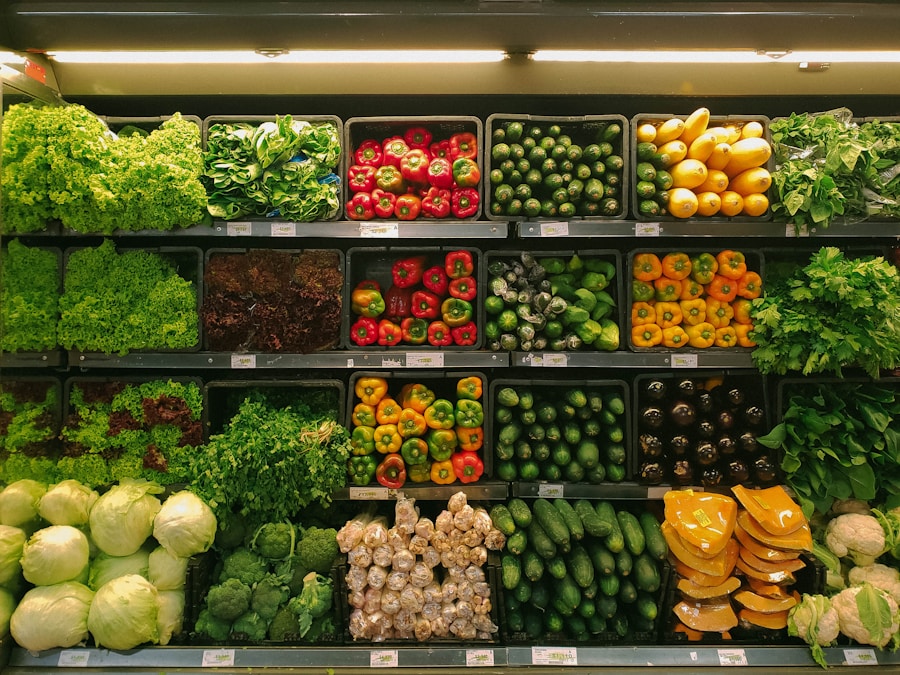
Food security means more than having food somewhere in the national supply chain. It includes reliable access to sufficient, safe, nutritious food at the community and household level. Aquaponics can contribute by placing controlled food production closer to the people who consume it. It is not a complete solution to hunger or agricultural risk, but it can become one useful layer in a stronger local food system.
Production closer to population centers
Aquaponics systems can be built near cities, schools, institutions, restaurants, and neighborhoods where conventional farmland may be limited. Producing food closer to demand can shorten transportation routes and create direct relationships between farms and buyers. Site selection still requires dependable water, power, access, zoning, security, and enough space for safe operations.
Year-round and extended-season capacity
Greenhouses can protect crops from some weather conditions and extend production beyond the normal field season. Environmental controls, crop selection, and energy availability determine whether true year-round production is economical. Even seasonal greenhouse production can improve local availability during periods when field supply is limited.
Efficient use of water and space
Recirculating water and high-density growing can support production where water or land is constrained. This can be especially valuable in urban and peri-urban areas. Resource efficiency should be measured honestly, including energy, feed, replacement water, labor, and infrastructure. A resilient food system must consider all critical inputs, not only the amount of land used.
Diversified local supply
Aquaponics can add leafy greens, herbs, specialty crops, and fish to the regional supply mix. Diversification matters because communities become more vulnerable when they depend on a small number of distant sources. Local aquaponics will not replace large-scale farms, but it can complement them and reduce pressure during disruptions.
Skills and workforce development
An aquaponics facility combines agriculture, aquaculture, biology, plumbing, electrical systems, greenhouse management, data monitoring, food safety, sales, and logistics. Training programs can prepare operators, students, veterans, career changers, and entrepreneurs for technical food-production roles. These skills remain in the community and can support future farms and related businesses.
Education and public understanding
Aquaponics makes nutrient cycling and food production visible. Students and visitors can observe fish, roots, filtration, bacteria, water testing, and harvesting in one place. Tours and classes can strengthen food literacy and help people understand the work required to produce safe, reliable food. Education can also build public support for local food investment.
Institutional partnerships
Schools, hospitals, food banks, universities, workforce programs, local governments, and nonprofit organizations can partner with aquaponic farms. Institutions may purchase products, host training, support research, provide land, or sponsor community access. Partnerships should define clear responsibilities and avoid relying on grants without a long-term operating plan.
Emergency resilience
A local greenhouse may continue producing during some transportation or market disruptions, but it also depends on electricity, pumps, feed, seed, packaging, and trained staff. Emergency resilience requires backup power, spare equipment, feed reserves, water storage, supplier redundancy, communication plans, and documented response procedures. The strongest systems plan for interruption rather than assuming self-sufficiency.
Access and affordability
Local production does not automatically make food affordable. Greenhouse facilities have significant costs. Farms can improve access through institutional contracts, tiered pricing, community-supported agriculture, food-bank partnerships, nutrition programs, education, and efficient distribution. Financial sustainability is necessary because a farm that cannot cover its costs will not support long-term food security.
A network approach
The greatest potential may come from networks of decentralized production hubs rather than one large facility. Multiple farms can share training, purchasing, branding, technical support, data, distribution, and backup supply. A network can place production near different communities while maintaining common standards. Building that network requires repeatable designs, operator certification, and strong quality control.
Conclusion
Aquaponics supports food security by adding local production capacity, conserving water, building technical skills, creating educational opportunities, and diversifying supply. Its contribution is strongest when the facility is financially stable, professionally operated, connected to local buyers, and prepared for emergencies. Food security is built through systems, partnerships, and people working together.
Call to Action
Aquaponics Lifestyle is developing a model for decentralized food-production hubs supported by training, partnerships, and repeatable operating systems.

Why Local Restaurants Should Buy Aquaponic Produce
Explore the value of fresh, locally grown, traceable produce for chefs, restaurants, hospitality partners, and farm-to-table programs.
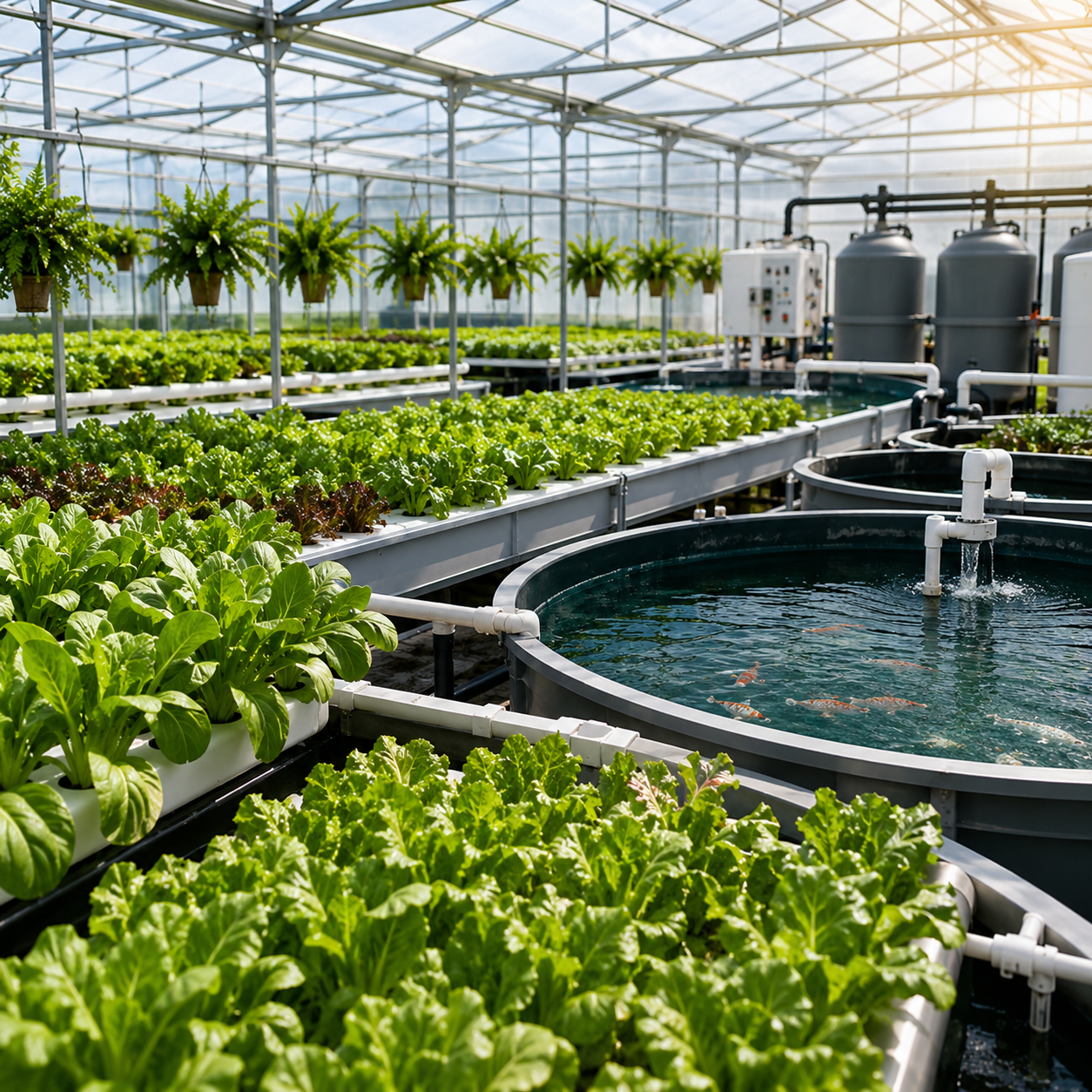
What Is Aquaponics and How Does It Work?
Learn how fish, plants, water, filtration, and beneficial bacteria work together in a recirculating food-production ecosystem.
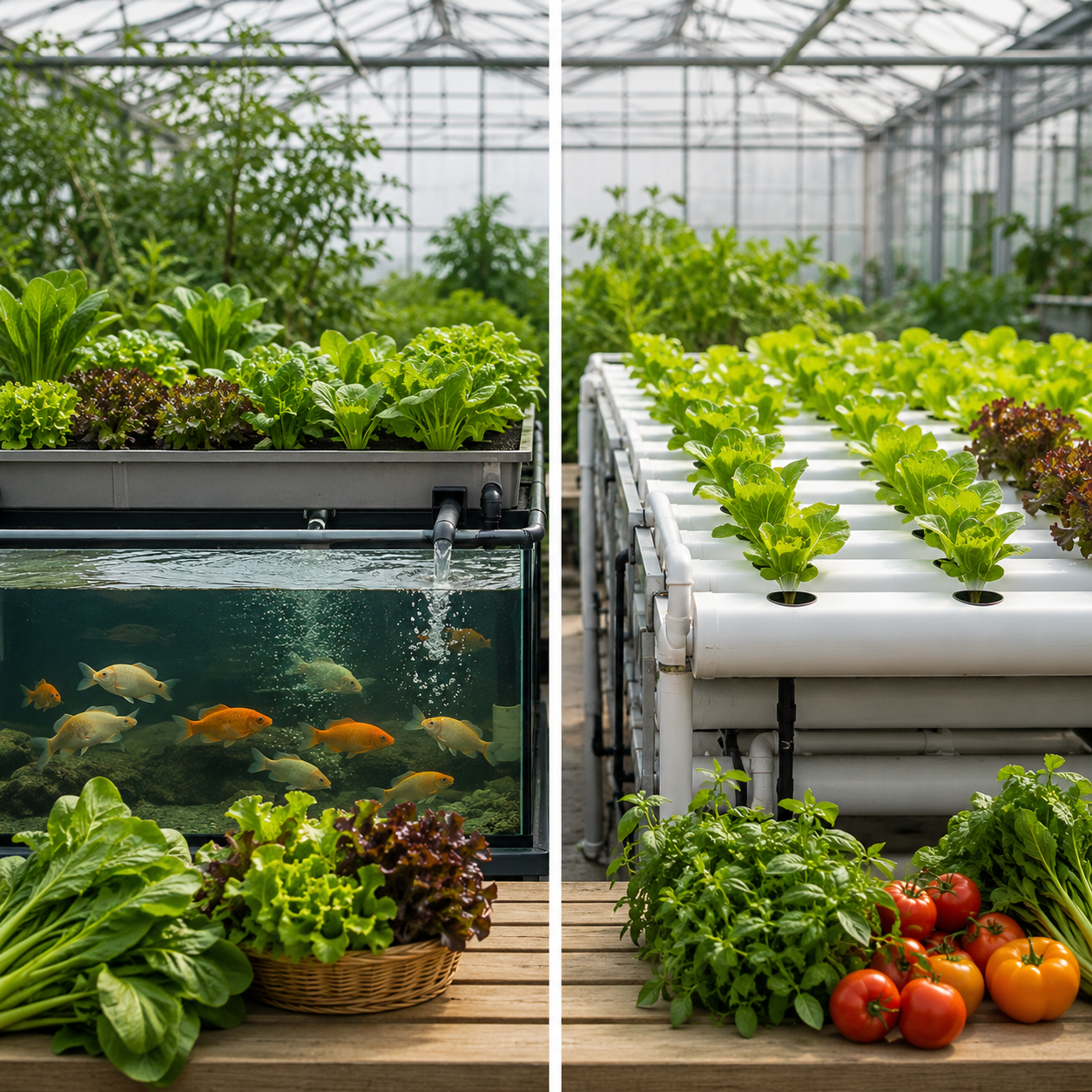
Aquaponics vs. Hydroponics: What's the Difference?
Compare the two growing methods and understand which model may be better suited to different goals and applications.