What to Expect During an Aquaponics Farm Tour
A walkthrough of what visitors actually see and learn during a real aquaponics farm tour — from biosecurity at the door to harvest and packing.
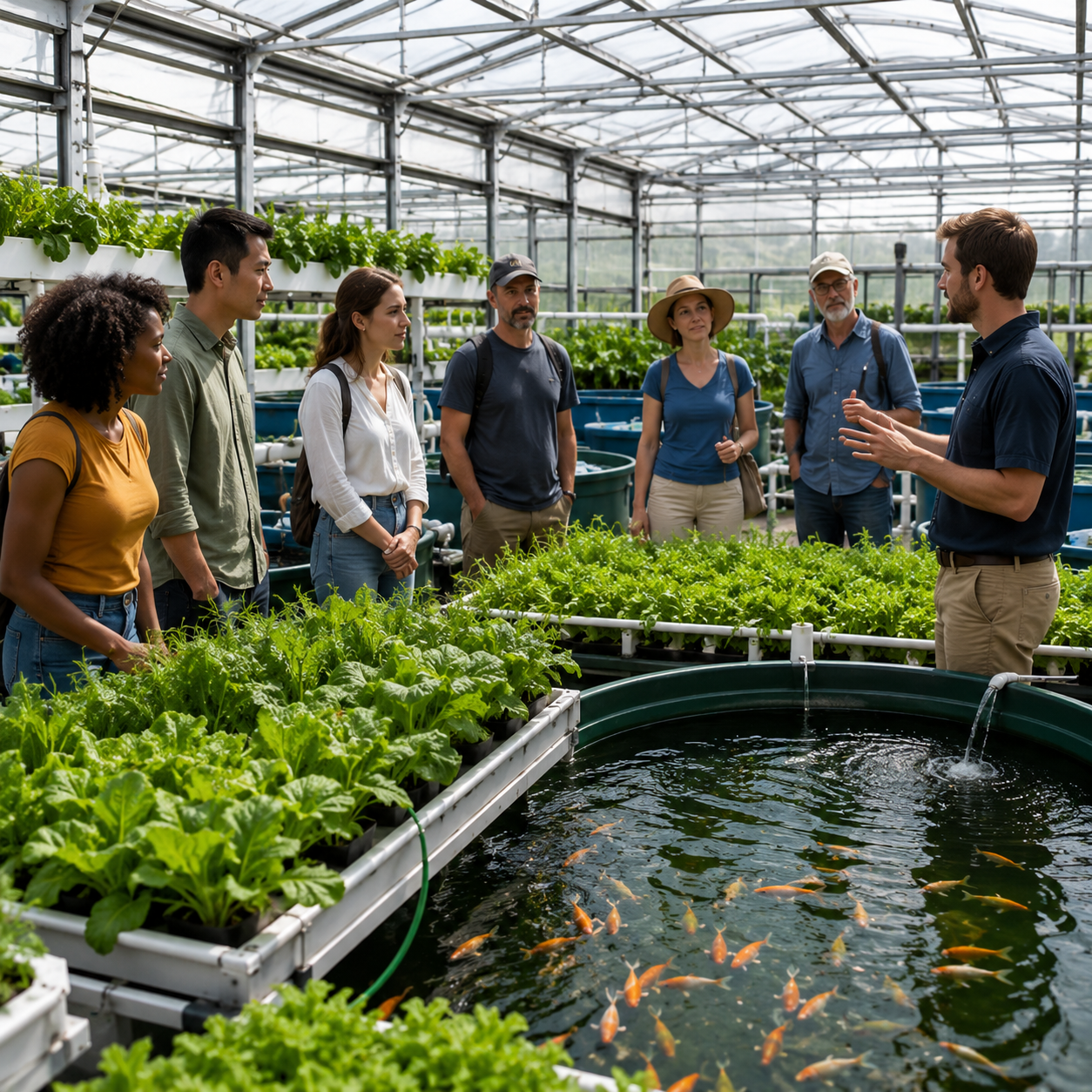
An aquaponics farm tour is an opportunity to see how fish, plants, water, equipment, and people work together to produce food. Visitors move beyond the simplified diagram and experience the real operation: the sound of aeration, the movement of water, the roots beneath the plants, the filters that capture solids, and the daily routines that keep the system stable.
Arrival and safety orientation
Most tours begin with a welcome, a brief overview of the farm, and basic safety instructions. Visitors may be asked to stay on marked walkways, avoid touching equipment or water, sanitize footwear, wash hands, and follow staff directions. Biosecurity protects fish and crops from pests and pathogens that can be carried between farms or outdoor environments.
The mission and farm model
The guide will usually explain why the farm was created, what markets it serves, which crops and fish it produces, and how the facility fits into the local food system. Commercial farms may discuss restaurants, farmers markets, direct sales, training, system sales, research, or community programs. This context helps visitors understand that aquaponics is both a biological system and an operating business.
Fish tanks and animal care
At the fish area, visitors may see tanks organized by fish size or production stage. The guide can explain stocking, feeding, growth, oxygen, temperature, behavior, and harvest planning. Visitors should not feed fish unless invited, because overfeeding can quickly damage water quality. The farm may also explain animal-welfare practices and local aquaculture regulations.
Mechanical filtration
The next stop often shows how solid waste and uneaten feed are removed. Clarifiers, swirl filters, drum filters, screens, settling tanks, or other equipment may be used. The guide may explain cleaning schedules and what happens to captured solids. Some systems mineralize or compost solids, while others dispose of them according to operating and regulatory requirements.
Biological filtration and the nitrogen cycle
Biofilters provide surface area for beneficial bacteria that convert ammonia into nitrite and nitrate. This is one of the most important steps in the tour because it explains how fish waste becomes useful plant nutrition. Visitors may see media, moving-bed filters, aeration, or other biological treatment components.
Plant production areas
In the greenhouse, visitors may see seedling racks, nursery rafts, deep-water culture beds, channels, media beds, towers, or trellised fruiting crops. The guide will explain seeding, transplanting, spacing, root inspection, pest management, and harvest. Visitors can compare young plants with mature crops and observe how roots interact with the circulating water.
Water testing and monitoring
A farm tour may include a demonstration of pH, dissolved oxygen, ammonia, nitrite, nitrate, temperature, or other tests. Commercial facilities may use digital sensors, alarms, dashboards, and automated controls. Staff will explain that technology supports operators but does not replace visual inspection, maintenance, and biological understanding.
Harvest, packing, and cold chain
Where food-safety rules allow, visitors may see the harvest and packing area. The guide can explain clean tools, handwashing, product inspection, weighing, packaging, labels, traceability, refrigeration, and delivery. This part of the tour shows the difference between growing a crop and preparing a professional product for customers.
Questions visitors often ask
Common questions include: Does the water smell? Are pesticides used? How much water does the system save? What happens during a power failure? How long do fish and crops take to grow? Can the system operate off-grid? Is the produce organic? The guide should answer accurately and explain that outcomes depend on design, management, local certification, climate, and operating practices.
How to prepare for the visit
Wear closed-toe shoes and clothing appropriate for a warm, humid greenhouse. Follow photography rules. Inform the farm about accessibility needs or large groups in advance. School and professional groups may receive worksheets or focused instruction. Visitors should arrive ready to ask questions and respect working areas, animals, employees, and customer privacy.
Conclusion
An aquaponics farm tour reveals the complete cycle behind the finished product. Visitors see the fish, filtration, bacteria, crops, testing, harvest, and business systems that make production possible. The experience can educate families, students, chefs, entrepreneurs, investors, and community leaders while building trust between the farm and the people it serves.
Call to Action
Schedule or inquire about an Aquaponics Lifestyle tour to experience the system, meet the team, and learn how local aquaponics works from tank to table.
What Is Aquaponics and How Does It Work?
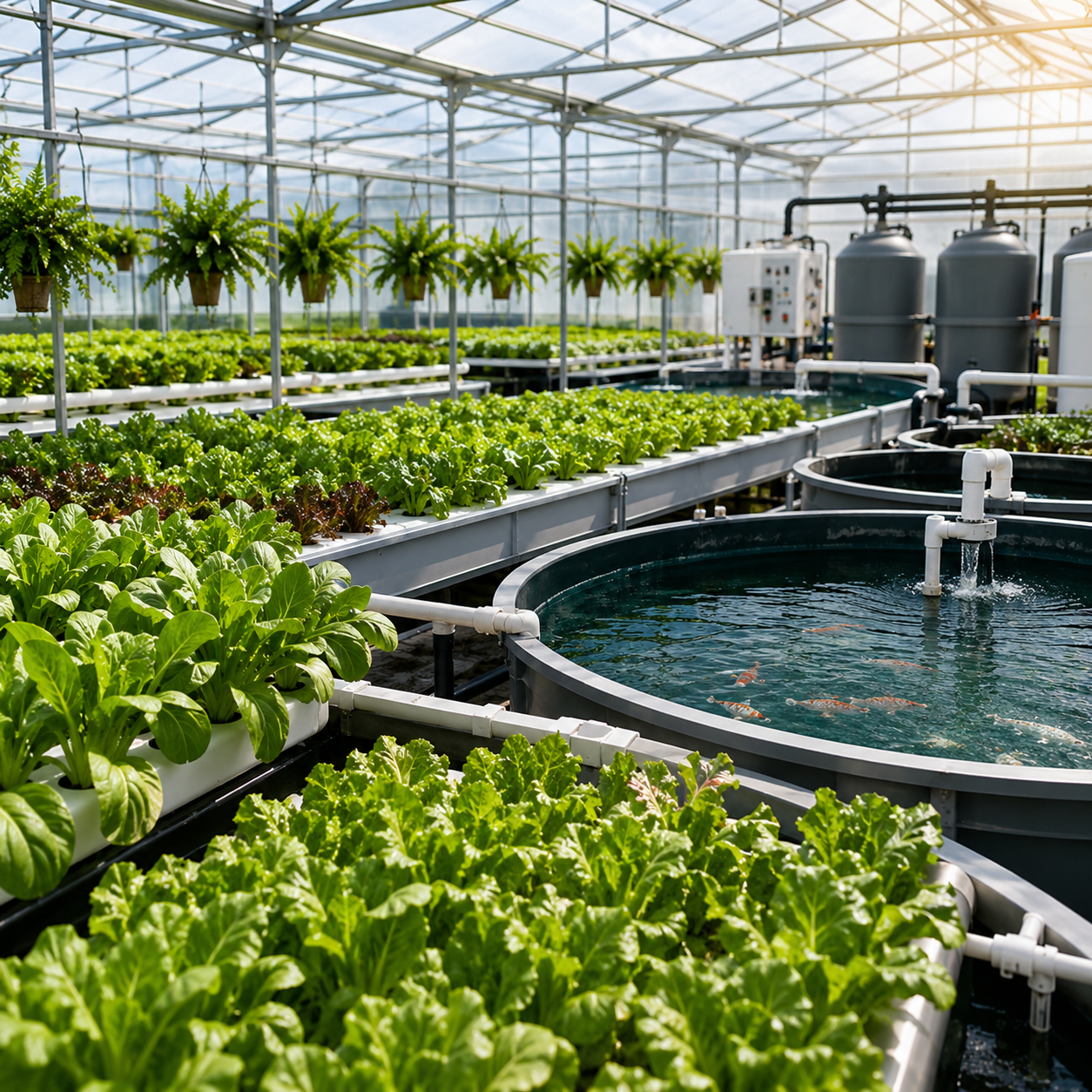
Learn how fish, plants, water, filtration, and beneficial bacteria work together in a recirculating food-production ecosystem.
Aquaponics vs. Hydroponics: What's the Difference?
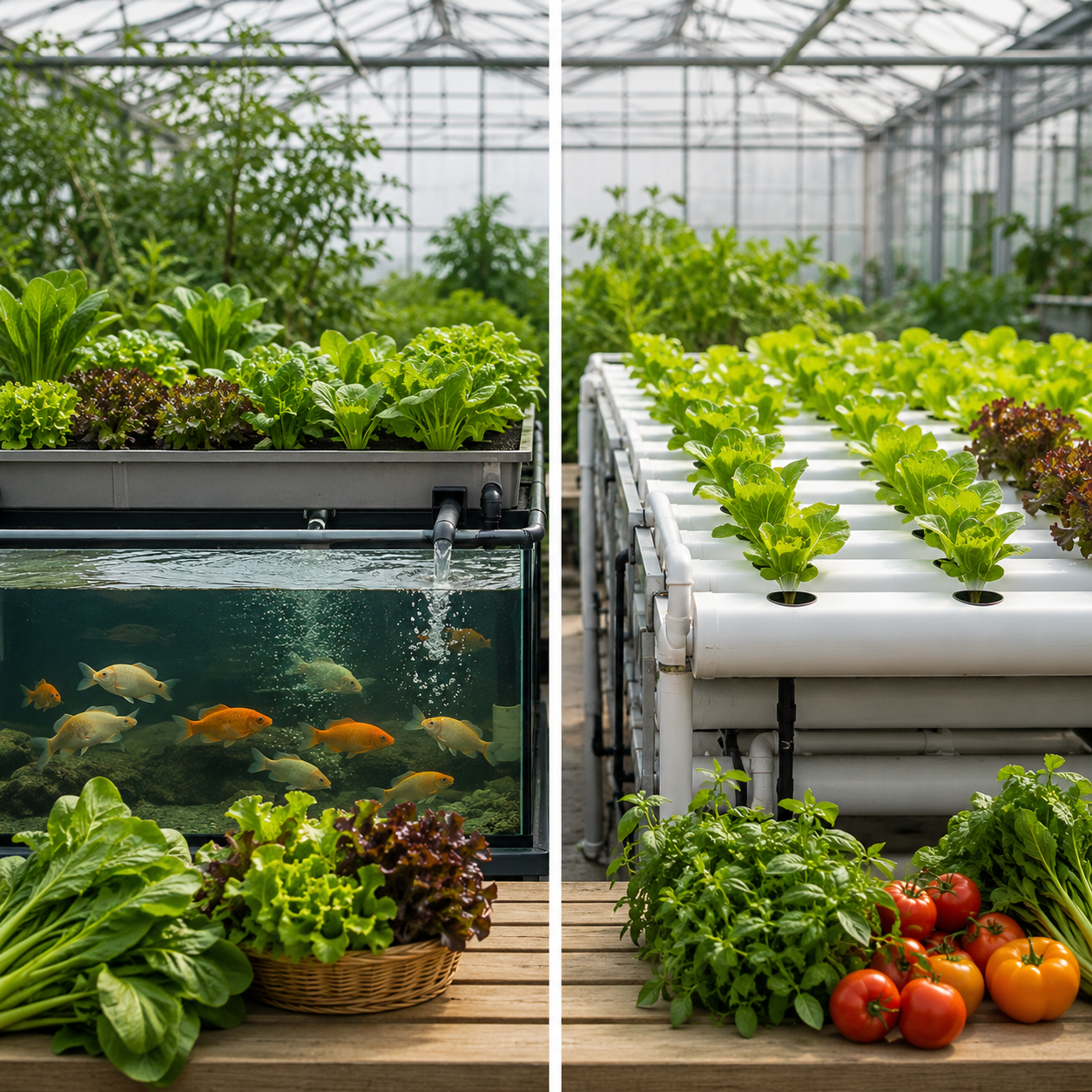
Compare the two growing methods and understand which model may be better suited to different goals and applications.
Why Aquaponics Uses Less Water Than Traditional Farming
Explore how water recirculation can reduce water consumption while supporting dependable crop production.