Why Aquaponics Uses Less Water Than Traditional Farming
How recirculation, greenhouse protection, monitoring, and disciplined operations let aquaponics produce food while using significantly less water than many field systems.
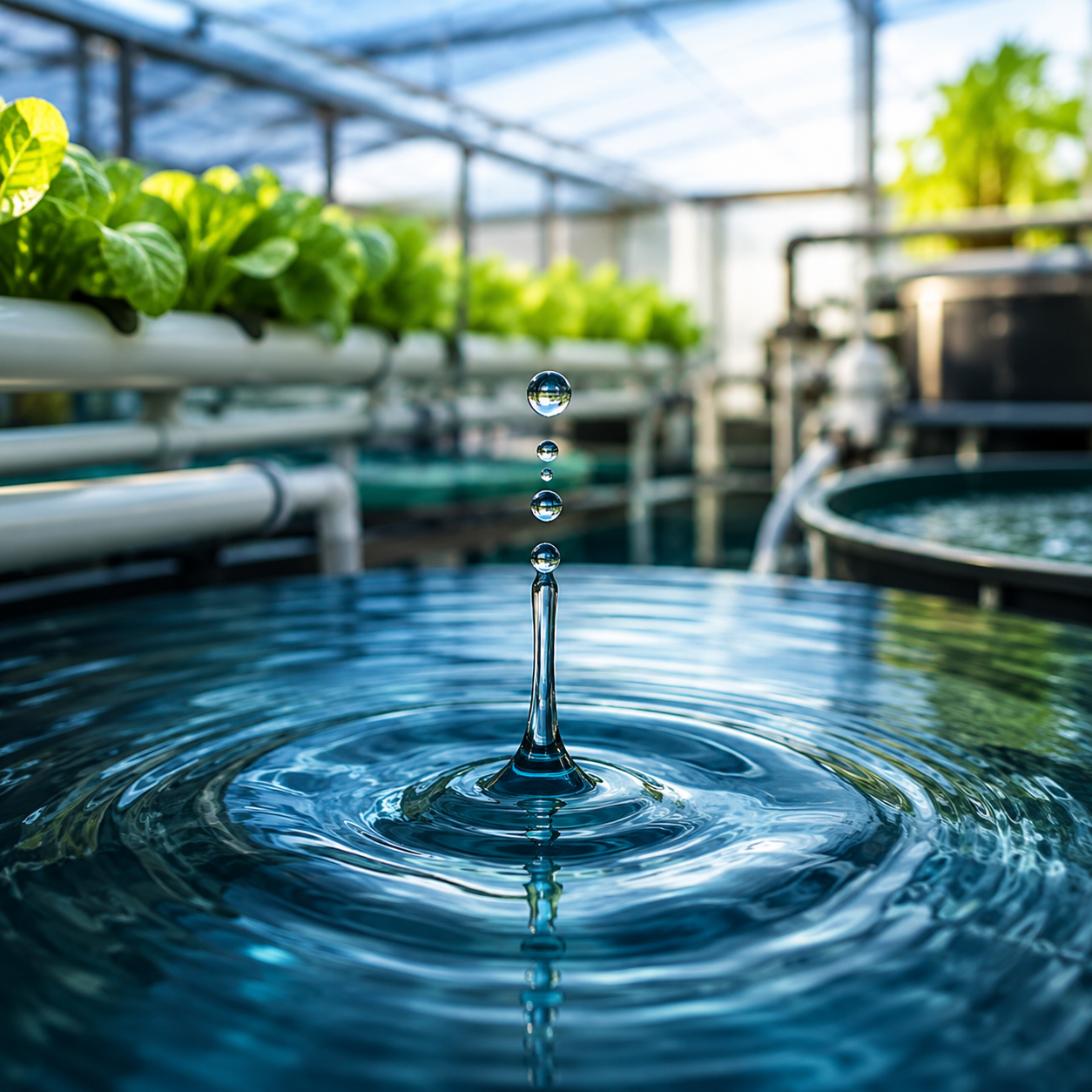
Water is one of agriculture's most important inputs. In open-field farming, irrigation water can be lost through runoff, evaporation, deep percolation, uneven application, and soil conditions. Aquaponics changes the water pathway by capturing it inside a recirculating production system. Instead of applying water once and allowing much of it to leave the crop zone, aquaponics repeatedly moves the same water through fish tanks, filtration, and plant roots.
Recirculation is the foundation
The primary reason aquaponics can use less water is recirculation. Pumps move water from the fish area through filtration and plant production areas before returning it to the fish. Plants remove water through transpiration, and some water is lost to evaporation, harvest, cleaning, and maintenance. The remaining water stays in the production loop. Operators add replacement water as needed rather than continuously applying a new supply.
How field irrigation loses water
Traditional farming is diverse, and efficient drip irrigation can perform very well. However, field systems are exposed to wind, sun, soil variability, drainage, and rainfall patterns. Water may move below the root zone, evaporate from the soil surface, or run away from the intended area. Aquaponics places roots in a controlled water environment and allows operators to observe flow, leaks, and water levels directly.
Greenhouse protection improves control
Many commercial aquaponics systems are located inside greenhouses. The structure helps reduce direct wind, manage rainfall exposure, protect crops, and extend the growing season. Greenhouses do not eliminate evaporation or heat stress, but they allow growers to use shade, ventilation, cooling, humidity management, and irrigation controls more deliberately than in an open field.
Plants use water productively
Most water leaving a healthy aquaponics system is not simply wasted; it is taken up by plants and released through transpiration as part of growth. This is a productive use of water. The goal is to minimize avoidable losses such as leaks, overflowing tanks, poorly timed filter cleaning, excessive flushing, and unmanaged condensation while supporting healthy plant development.
Fish production shares the same water
Aquaponics uses one circulating water resource to support two biological outputs. Fish live in the water, while plants use the dissolved nutrients transported by that water. This does not mean every system produces the same amount of food per gallon. Performance depends on fish density, feed quality, crop selection, system balance, climate, labor, and survival rates. Still, integrating fish and crops can make the water resource work across multiple production functions.
Monitoring protects efficiency
Water conservation depends on reliable operations. Float switches, level sensors, flow meters, leak detection, alarms, and daily inspections can identify problems before a large volume is lost. Operators should record top-off water, filter-cleaning water, rainfall capture, discharge, and production volume. Measuring these values turns water efficiency from a marketing claim into an operational performance indicator.
Rainwater and alternative supplies
Depending on local regulations and water quality, rainwater harvesting can supplement an aquaponics operation. Collected water must be stored safely and tested for contaminants, pH, alkalinity, and mineral content. Well water, municipal water, and other sources may require treatment. Chlorine or chloramine, excessive hardness, salinity, iron, or other characteristics can affect fish, plants, and bacteria.
Water efficiency is not automatic
A poorly maintained aquaponics system can waste water. Leaking plumbing, clogged drains, overflowing filters, incorrect valve positions, excessive crop cooling, or emergency water exchanges can erase much of the advantage. Good design should include accessible plumbing, shutoff valves, overflow routes, backup pumps, clear labels, and maintenance procedures. Staff must understand the consequences of every drain and fill action.
Why this matters locally
Water-efficient food production is increasingly important in regions facing drought, population growth, high summer temperatures, and pressure on existing water supplies. Aquaponics can help place controlled food production near cities, restaurants, schools, and communities while reducing the land and water exposure associated with some conventional supply chains. It is not a replacement for all agriculture, but it can be a valuable part of a diversified regional food system.
Conclusion
Aquaponics saves water by keeping it in motion and using it repeatedly. The strongest results come from thoughtful system engineering, protected growing environments, accurate monitoring, trained operators, and a culture that treats every gallon as a measurable resource. Water efficiency should be designed, recorded, and continuously improved.
Call to Action
Learn how Aquaponics Lifestyle can help plan a recirculating system with water monitoring, operating procedures, and training built into the project.
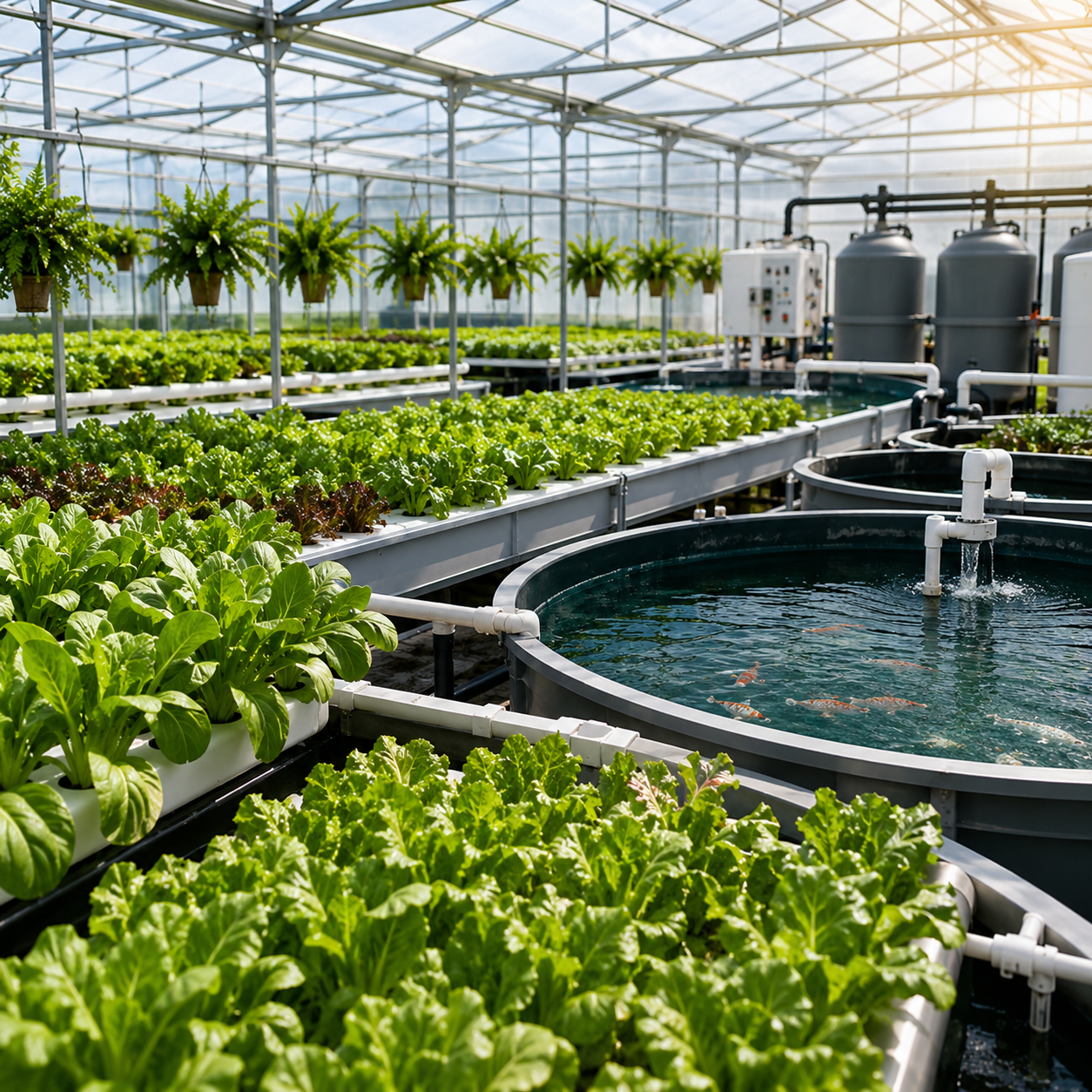
What Is Aquaponics and How Does It Work?
Learn how fish, plants, water, filtration, and beneficial bacteria work together in a recirculating food-production ecosystem.
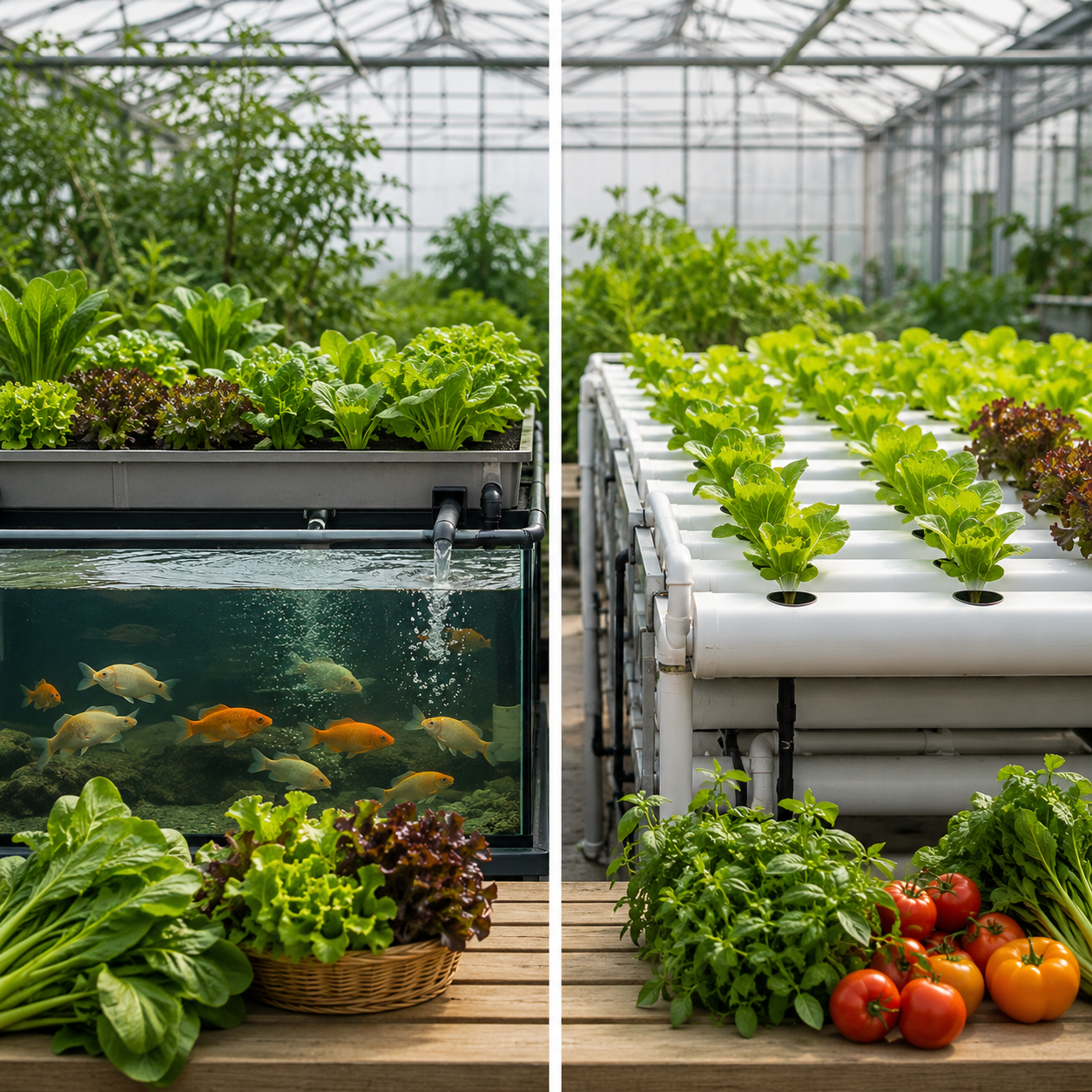
Aquaponics vs. Hydroponics: What's the Difference?
Compare the two growing methods and understand which model may be better suited to different goals and applications.

Can Aquaponics Be Profitable?
Explore potential revenue streams, major cost factors, operating requirements, and the planning needed to build a sustainable aquaponics business.